tools that put a card, a phone number or a required connection between sign-up and first use
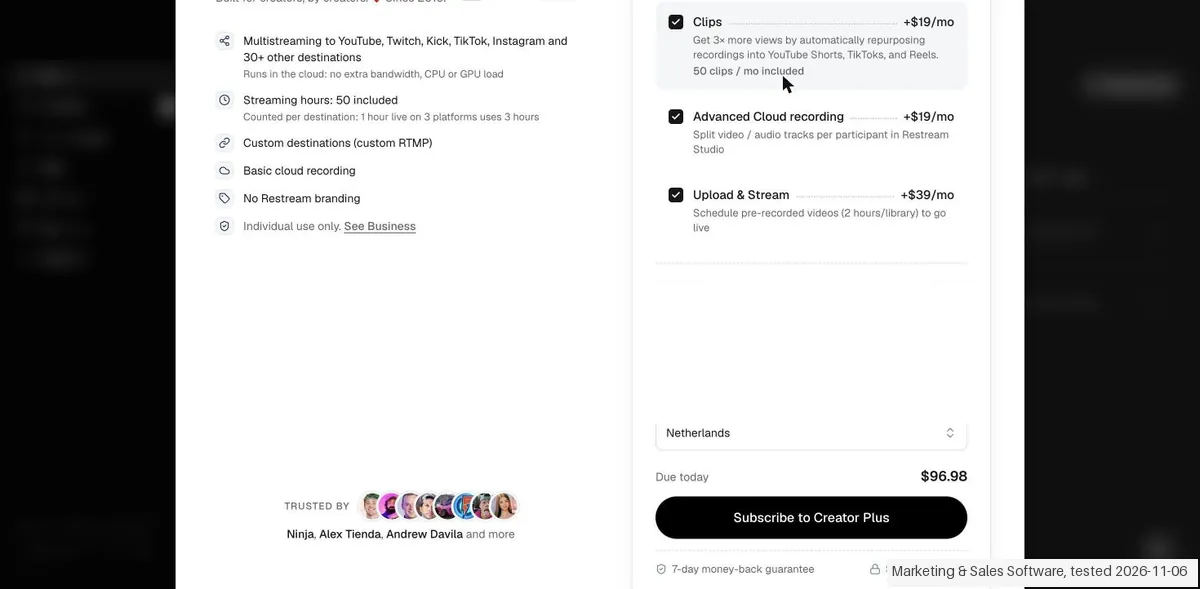
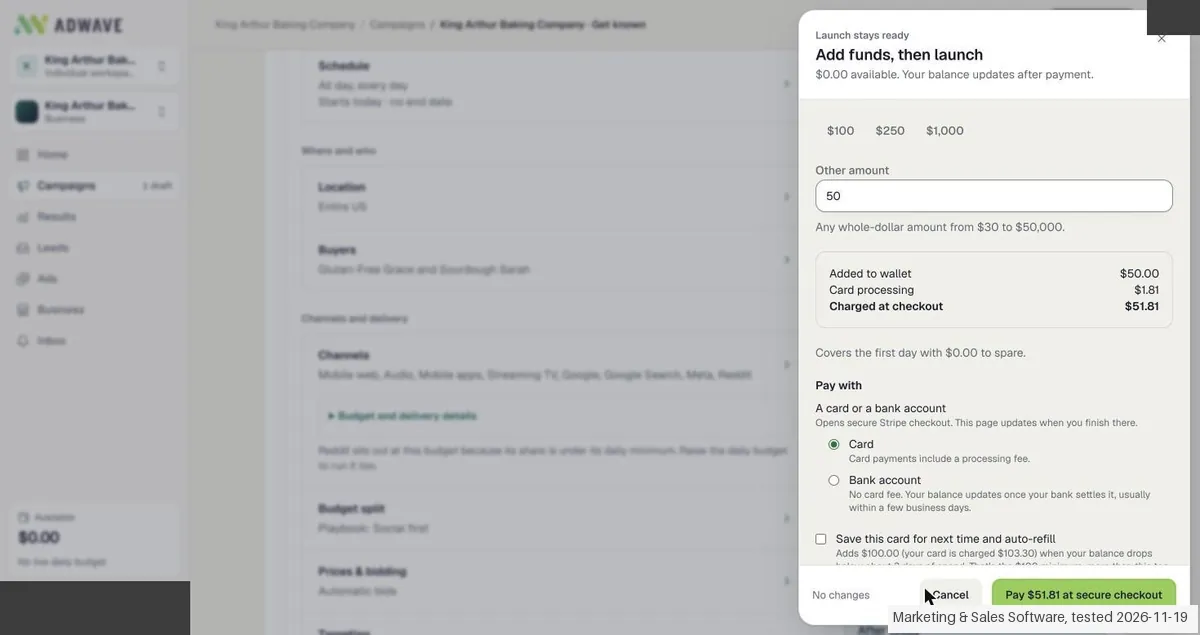
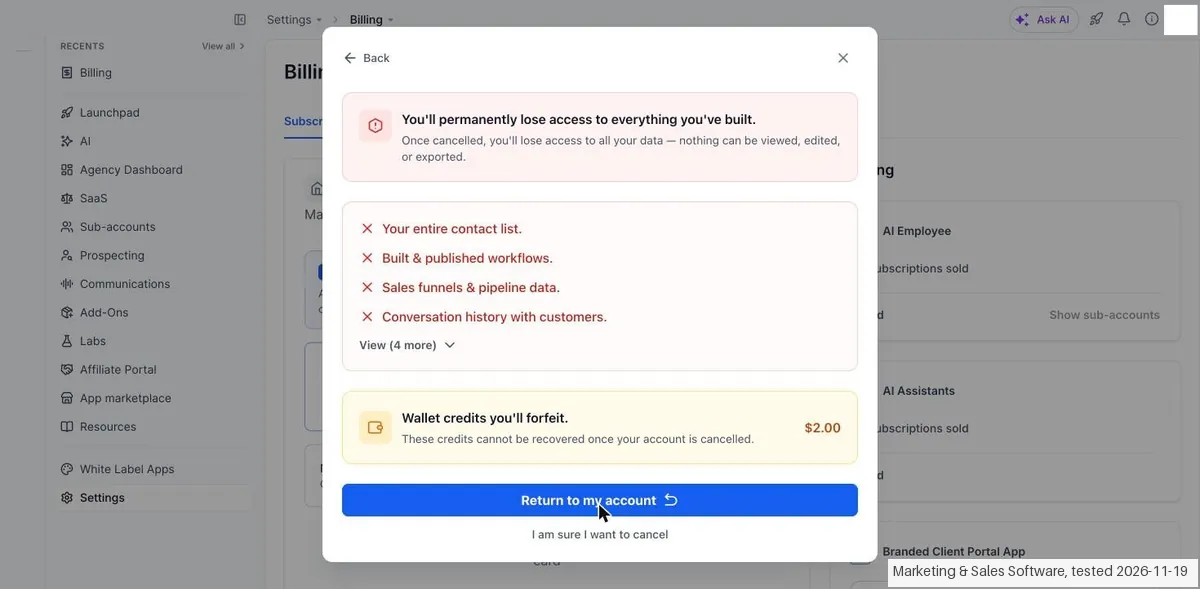
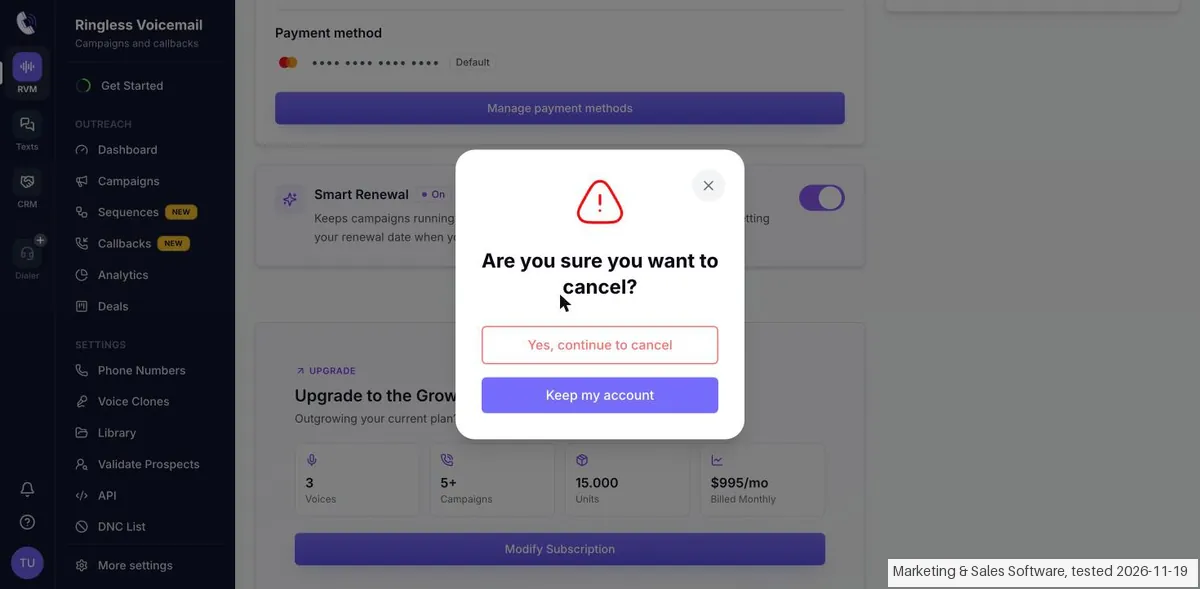
Before you sign up, open the checkout and read every line with a tick in it, and look for the cancel button before you need it.
These are the tools we tested ourselves, one account each; this is not a sample of the SaaS market.
20 October 2026 to 19 November 2026
19 November 2026 · with every new batch of hands-on tests (new edition)
We signed up for 309 business software tools between 2026-10-20 and 2026-11-19, ran a real task in each, and where we could, opened the checkout and cancelled again. This report counts what stood in the way: a card before the trial, a phone number, a connection you must make before you see anything, extras ticked for you at checkout, and a cancel button behind a row of offers.
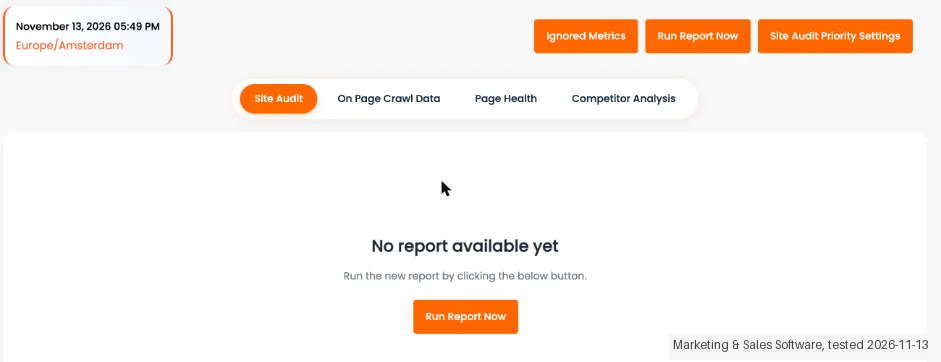
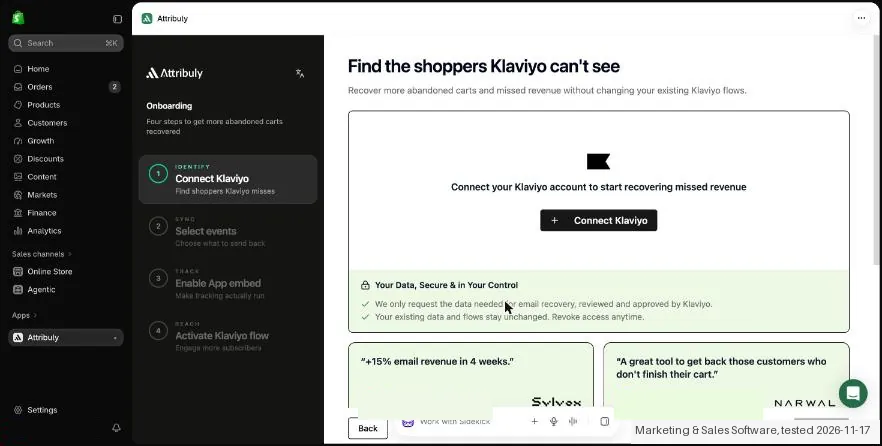
In hands-on tests of 309 business software tools (2026-10-20 to 2026-11-19), AIBuilder Marketplace found that 23 of 259 tools where the sign-up could be checked (9%) put at least one hurdle between sign-up and first use: a required payment card, a required phone number or a required account connection. Every finding is backed by a screenshot from the test.AIBuilder Marketplace, Report 09, edition 2026-11-19. Free to quote with attribution.
Of the 5 checkouts above the advertised price, 3 added VAT only at the checkout; the others added fees or extras. The base differs per line, because not every test reached every step: we only count a tool for a hurdle when our test record says what happened at that step and a screenshot from the same test shows it. Where we cancelled (22 tools), the median route took 4 screens and 2 retention offers; 1 asked for the account password at the end. Where we timed the first useful result (151 tools, usually one small task in a working account), the median was 2 minutes.
Each scorecard lists every tool in that group with its result per step and a link to the screenshot.
| Group | Tools | Hurdle before first use | Checkout above price | No result in the test |
|---|---|---|---|---|
| Growth and revenue tools | 63 | 3 of 53 (6%) | 2 of 11 | 3 of 29 |
| E-commerce apps | 68 | 8 of 59 (14%) | 0 of 34 | 4 of 53 |
| Operations and productivity | 66 | 4 of 54 (7%) | 1 of 6 | 1 of 26 |
| Marketing, SEO and content | 49 | 4 of 42 (10%) | 0 of 10 | 2 of 31 |
| Sales, support and communication | 30 | 3 of 26 (12%) | 1 of 4 | 0 of 11 |
| Finance and HR | 16 | 1 of 12 (8%) | 0 of 2 | 1 of 5 |
| Developer, security and web tools | 17 | 0 of 13 (0%) | 1 of 2 | 1 of 8 |
This is not the SaaS market. These are the tools we review and could test ourselves, mostly software for small and mid-sized businesses.
A hurdle is not always a flaw. A card check can stop abuse of a trial, and a domain check can protect your data. We count what a buyer meets on the way in and out, not whether the vendor had a good reason.
Refused sign-ups are undercounted. A refused account leaves no screenshots from inside the product, and we only count a finding that a published screenshot backs. Tools that turned us away are therefore mostly missing here.
One account, one date. Sign-up and checkout flows change often. Each finding carries its test date, and a vendor that changed its flow can send us the new screen; we publish corrections as a new edition.
We created a separate account for each tool; our AI assistant then ran the test in our own browser and wrote down every step, with screenshots. Names, e-mail addresses and account details are masked in every screenshot before it is published. Where a trial asked for a card, we used our own card and cancel each trial before the first charge; nothing in this report depends on a payment going through.
For this report an AI model read each test record and coded nine features: card required, phone required, sign-up refused, required connection, pre-ticked extras, checkout total against the price page, the cancel route, time to the first useful result, and e-mails after sign-up. Two of them are not reported as a number: refused sign-ups (see above) and e-mails after sign-up, which too few tests counted. A feature was kept only if the model quoted the test record word for word and pointed to a published screenshot of the same test; a script checked both and dropped the feature otherwise. We then checked every finding that counts as a hurdle by hand against its quote and screenshot, and corrected or removed 11, mostly where the hurdle came from our own test setup or was not clearly the vendor's. For e-mails after sign-up, see Report 07.
Download everything for edition 2026-11-19 (.zip)
Edition 2026-11-19. Every file below is the analysis input or output of this edition; the checksums let you confirm you have the same bytes we published. The manifest carries the population, period, definitions and counts. A rebuild of this page is not a new measurement: new rounds become new editions, and a changed edition carries a correction note.
| File | Size | SHA-256 |
|---|---|---|
| friction_findings.csv | 515,361 bytes | 6c854297cb76831e… |
| Edition | Status | Headline | Data |
|---|---|---|---|
| 2026-11-19 | current | 23 of 259: tools that put a card, a phone number or a required connection between sign-up and first use | manifest |
Archived on Zenodo with a DOI: 10.5281/zenodo.24394722 (always resolves to the newest edition). This edition: 10.5281/zenodo.24394723. The Zenodo copy holds the same data files; screenshots of vendor software stay on this page only.
Licence: CC BY 4.0. Our own data, analysis, tables and charts. Quoted vendor text and screenshots of vendor pages remain the vendor's; we reproduce them as evidence. Questions, corrections or a vendor response: daniel@aibuildermarketplace.com · press & data.
AIBuilder Marketplace, “SaaS Signup & Checkout Friction Report 2026”, Report 09, edition 2026-11-19, first published 2026-11-20. Free to quote and reproduce with attribution (CC BY 4.0).