 Textline Review (2026)Backup Credits Cost 33% More
Two costs are easy to miss and both are monthly.
Pricing (2026)
✓ Pricing re-verified 31 Aug 2026
Amounts unchanged since 2026-08-01. Add-on message credits $0.03 each, bought in advance; backup message credits $0.04 each, Textline's automatic fallback when you run out mid-conversation. A $15 monthly 10DLC campaign fee applies if you use a 10DLC long code; the same page states that toll-free numbers do not carry a monthly registration fee. NEW since the last reading: the page now names three tiers with their inclusions but still no prices — Essentials (600 minimum included message credits a month, three agents, three-year conversation history), Pro (2,000 minimum credits, five agents, unlimited history, Salesforce, custom roles) and Enterprise (quote).
HIPAA-compliant plans are charged an additional fee. Note for future readers: the per-feature tooltips on this page are unfilled placeholder copy, so the feature names carry no explanation. Plans change — always verify the live price on their site.
What the pricing page doesn’t say
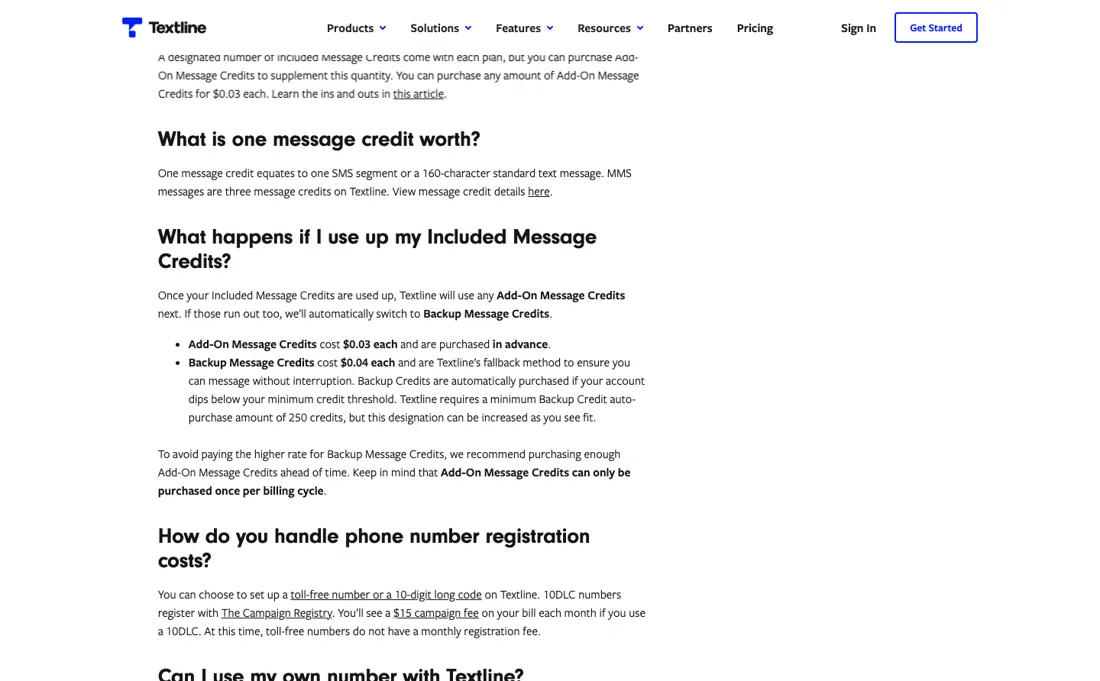
The credit system has two rates: $0.03 for credits you buy deliberately and $0.04 for backup credits that fire automatically when you run out — a 33% premium for not noticing. And a $15 monthly 10DLC campaign fee appears on your bill if you use a 10DLC long code, charged by the carrier registry rather than by Textline, so no plan removes it; the same page notes that toll-free numbers carry no monthly registration fee, so the number type is the lever, not the tier.
Plan prices are still not published — the page names Essentials, Pro and Enterprise and what they include, but no dollar figures.
What Textline does
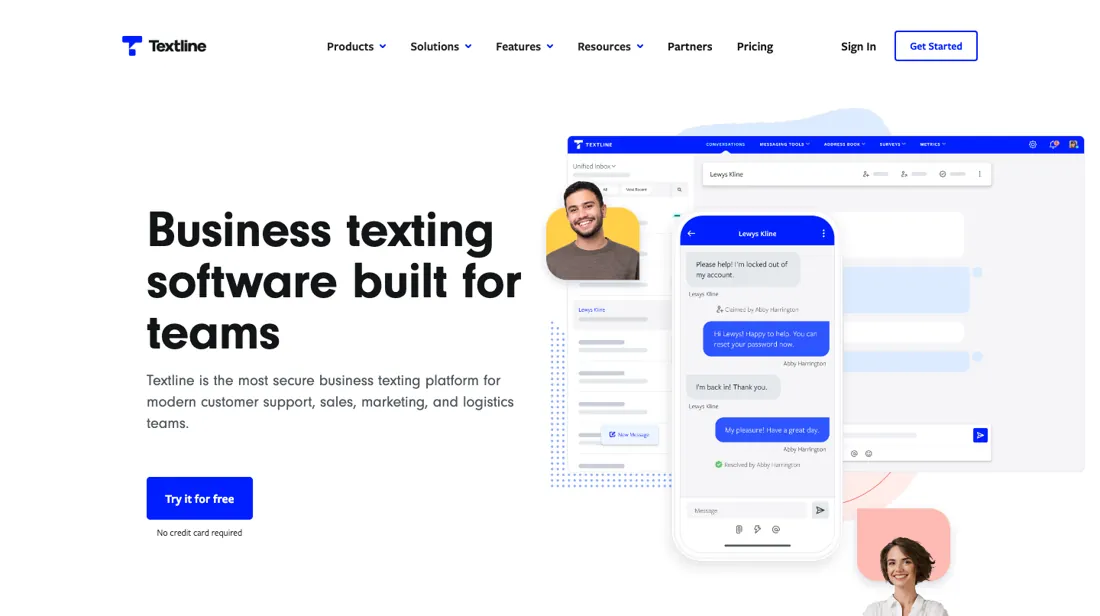
Business SMS for support and sales teams: shared inboxes, automations and compliance tooling.
What buyers report about Textline
Recurring themes from the buyer-review sites listed at the foot of this page, read in August 2026. We have not run Textline ourselves, so this is other buyers' experience rather than ours. We summarise it here because the complaints are usually the part a vendor page leaves out.
- • Support replies within minutes and reviewers describe it as friendly, knowledgeable and patient — consistently the most-praised part.
- • The shared inbox, two-way texting and automations are solid, and the interface is easy for a team to pick up.
- • Message fees are separate from the monthly plan, and incoming messages are not free either. The $20-$50 per agent is the floor, not the total.
- • The interface is dated enough that reviewers say it slows onboarding.
- • There is no fully functional native mobile app.
Backup credits cost a third more
The page still documents the meters rather than the prices, but it does now name three plans, and that changes what you should ask for. Essentials carries a 600-message-credit monthly minimum, three agents and three years of conversation history; Pro raises that to a 2,000-credit minimum, five agents and unlimited history; Enterprise is a conversation. No dollar figure appears against any of them, and HIPAA-compliant plans cost extra on top of whatever you agree.
Two meters sit alongside the plan. Message credits bought in advance are $0.03 each; backup credits, the fallback that fires automatically when you run out mid-conversation, are $0.04 — a 33% premium for not noticing, charged at the exact moment you are mid-sentence with a customer. The $15 monthly 10DLC campaign fee is the line people budget wrong, and upgrading does not touch it: the carrier registry charges it, not Textline, so no plan removes it.
The number type does. The same page states that toll-free numbers carry no monthly registration fee, which makes this a routing decision rather than a billing one.
How to actually use Textline
Set your credit top-up threshold on day one, high enough that backup credits never trigger. Deliberate credits are $0.03 and automatic backup credits are $0.04, so this single setting is worth 33% on every message it prevents, and it takes a minute. Decide the number type before you register anything, because the $15 monthly campaign fee follows that choice and not your plan. A 10DLC long code carries the fee; the pricing page states toll-free numbers have no monthly registration fee.
Read Textline's own explainers on number types and on The Campaign Registry first, since the choice also affects how registration works. You can now compare the tiers yourself on what is included — 600 versus 2,000 minimum message credits a month, three versus five agents — so ask sales only for the two dollar figures and for what an overage costs. Settle compliance before the first campaign: registration, documented opt-in and a working opt-out stay your responsibility whatever the platform does.
Distilled from Vendor pricing page https://www.textline.com/pricing (read 2026-08-31, from a European exit — plan tiers, credit rates, 10DLC and toll-free fee FAQ); Textline, 'The Campaign Registry explained' https://www.textline.com/blog/the-campaign-registry-explained-how-to-register-forms-you-need-faqs (read 2026-08-31); Textline, 'Types of phone numbers' https://www.textline.com/blog/types-of-phone-numbers (read 2026-08-31). Not usable as a source: support.textline.com did not resolve on 2026-08-31.
The natural comparison is Salesmsg or Zipwhip — the direct business-texting peers — compare on the per-message rate plus the 10DLC fee, since the platform fee is only part of it.
The ex-banker filter — the same yardstick on every review (how we review): My ex-banker filter is simple: does Textline remove a real cost — time, errors, missed revenue — bigger than what it charges?
Frequently asked questions
What should I weigh before buying Communication & Voice software?
Generally yes, since this category is built for it, but the details that bite are timezone handling, how per-seat cost scales as the team spreads, and whether numbers, routing or coverage exist in the countries your people actually sit in. Availability varies far more by country than the marketing pages suggest, so check your specific regions before committing.
Is this a hands-on review of Textline?
This is a researched assessment, not a hands-on test — where we've used a tool ourselves, we say so explicitly. We name what each tool is genuinely good and bad at, and we have no affiliate relationship with Textline — we earn nothing whether you sign up or not.
- Buyer reviews on GetApp, Software Finder, SelectHub and Research.com, read August 2026.
- Price re-verified 2026-08-31 against the vendor's own pricing page, read from a European exit.
- A dated screenshot of that pricing page, kept on this site as the receipt.
Others in this category
Reviewed communication & voice tools that share ground with Textline — comparable in what they do, not drop-in swaps:
New dossiers, cost-traps we found, and tools that earned a keep — no hype, no sponsored-disguised-as-advice. Unsubscribe anytime.
This is our researched assessment — not a paid placement. How we review →