Home › Comparisons › Deputy vs Connecteam
HONEST COMPARISONDeputy vs Connecteam
Two tools, one job. Here is the trade-off as our research found it — no winner-by-default, no invented numbers.
Side by side
| PRICING | (2026-07-31, read in a live browser session on deputy.com/pricing with both billing toggles) Three plans, per user per month and excluding tax. | Genuinely free for small businesses up to 10 users (all features, no time limit); paid hubs (Operations, Communications, HR) each start around $35/mo for up to 30 users and scale to about $119/mo, with annual billing ro… |
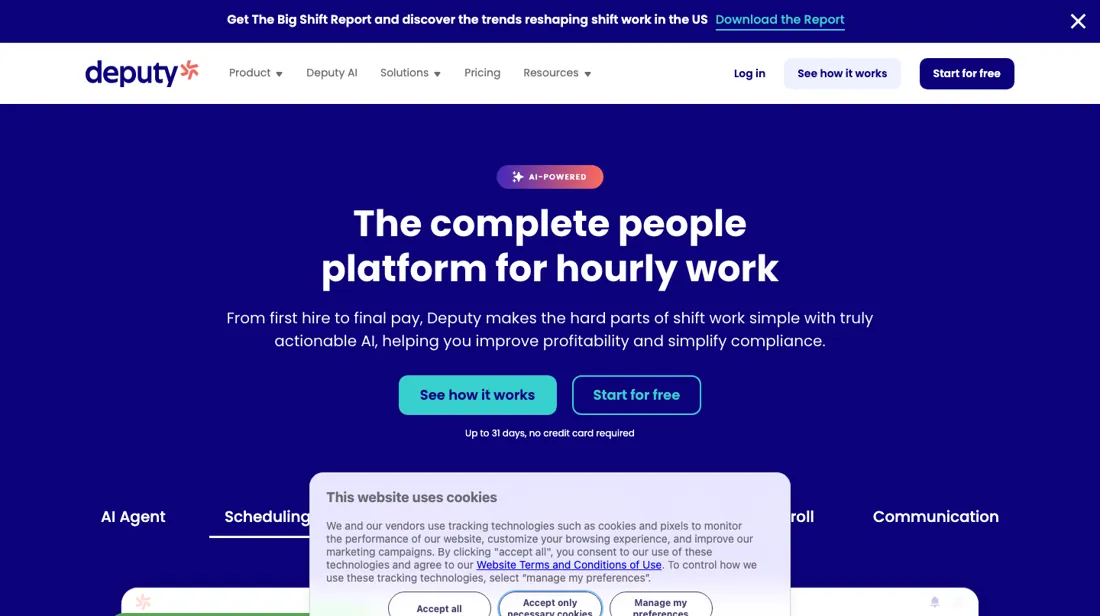
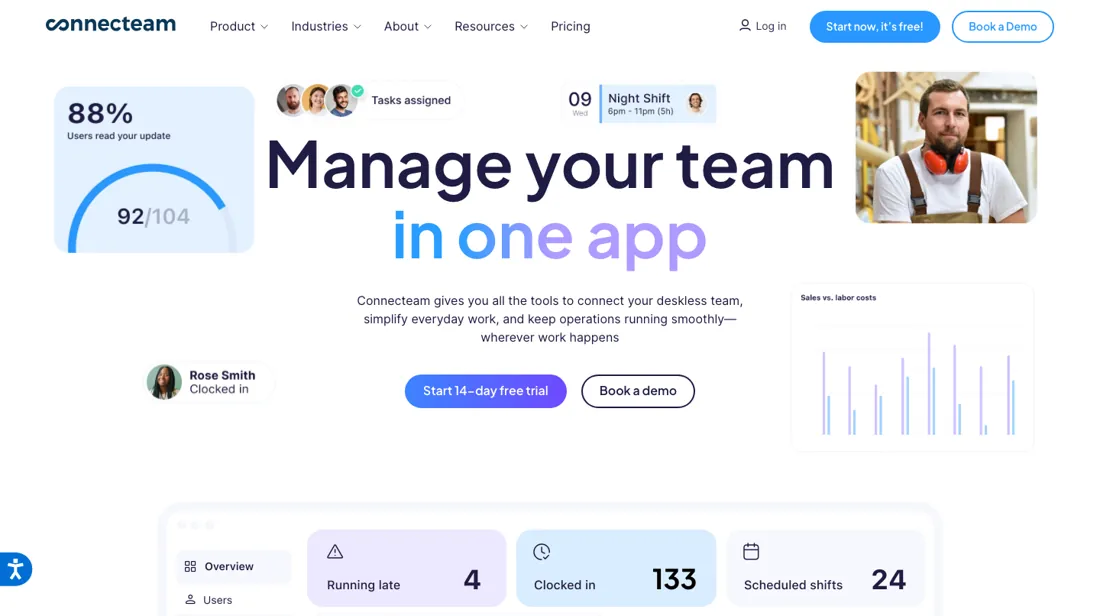
| GENUINELY BEST FOR | shift-based businesses — hospitality, retail, healthcare, any hourly workforce — that need rostering, clocking and labour-law compliance in one system and have enough staff to clear the minimum spend | deskless and frontline teams (shift work, field crews) that need scheduling, a time clock and comms in one app, on the free-for-10 plan |
| SKIP IT IF | you run a small salaried desk team: the $30 monthly minimum means you pay for roughly six users whether you have them or not, and salaried staff rarely need shift-level clocking at all | your whole team sits at desks with email and Slack — this is built for the frontline, and a general PM tool fits an office better |
| THE HONEST KNOCK | The minimum monthly spend is the number to check before anything else: at $5.50 per user on monthly billing, a team of fewer than about six people still pays the $30 floor, so the headline per-user price is misleading a… | The free-for-10 plan is one of the most generous in the category, but the three-hub structure means costs can stack if you need all of them — price the specific hubs you'll actually use, not the full bundle. |
See them side by side
The verdict
Pick Deputy if you’re shift-based businesses — hospitality, retail, healthcare, any hourly workforce — that need rostering, clocking and labour-law compliance in one system and have enough staff to clear the minimum spend. Walk away if you run a small salaried desk team: the $30 monthly minimum means you pay for roughly six users whether you have them or not, and salaried staff rarely need shift-level clocking at all — in that case the comparison above tells you where to look instead.
Try Deputy →Read the full Deputy review
Questions people actually ask
Which is better, Deputy or Connecteam?
There is no universal winner — it depends on the job. Deputy and Connecteam solve the same job with different bets — Connecteam as the all-in-one deskless-team app. The honest side-by-side below shows who each is genuinely for.
Is Deputy worth it in 2026?
Deputy is genuinely best for shift-based businesses — hospitality, retail, healthcare, any hourly workforce — that need rostering, clocking and labour-law compliance in one system and have enough staff to clear the minimum spend. Skip it if you run a small salaried desk team: the $30 monthly minimum means you pay for roughly six users whether you have them or not, and salaried staff rarely need shift-level clocking at all.
What is the honest downside of Deputy?
The minimum monthly spend is the number to check before anything else: at $5.50 per user on monthly billing, a team of fewer than about six people still pays the $30 floor, so the headline per-user price is misleading at small scale.
More honest comparisons same category
This comparison is our researched assessment — not a paid placement. Some links are affiliate links: we may earn a commission if you sign up, at no extra cost to you, and it never changes the take. How we review →